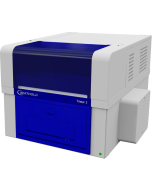
Tristar 5 Multimode Reader
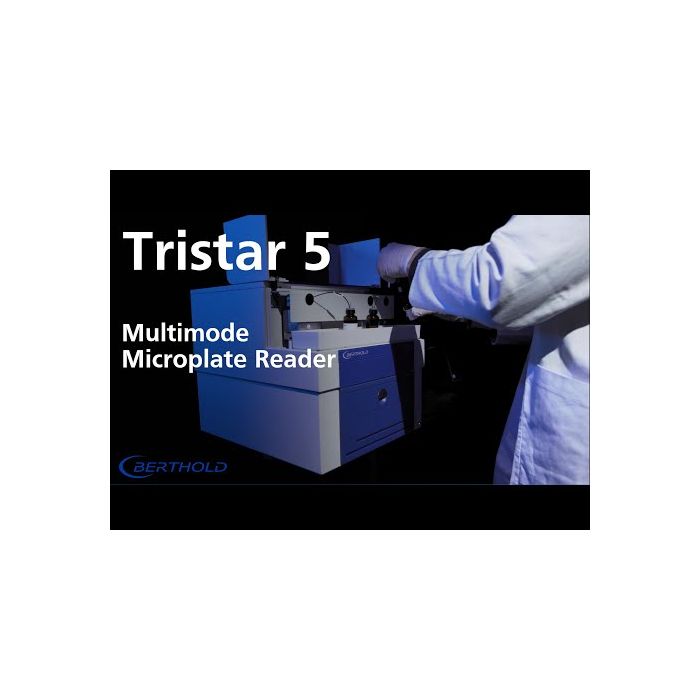
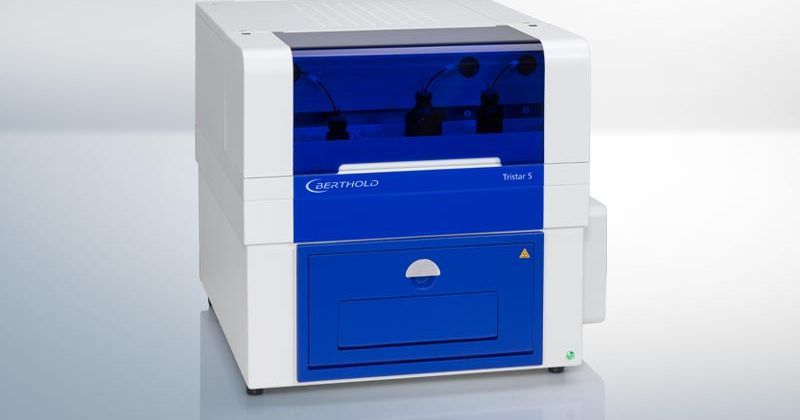
The TriStar 5 is a modular high-performance microplate reader equipped with independent, user-selectable filters and monochromators on both the excitation and emission side for any measurement. This guarantees both flexibility and sensitivity whenever you need it.
The system supports advanced detection modes such as HTRF, TRF, TR-FRET and FP as well as specific assays like BRET/BRET2, NanoBRET, LanthaScreen, AlphaScreen or Transcreener. FlexTec optics allow you to freely combine filter and monochromator technology — use filters for maximum sensitivity, monochromators for flexible wavelength selection, or mix both in a single assay.
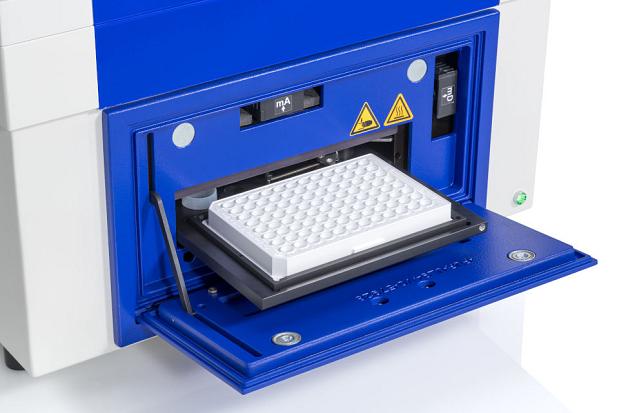
The advanced bottom-reading technology can be easily selected via software to analyse adherent cells with high sensitivity and superior signal-to-background ratio. The ergonomic design provides full front access for plate loading, filter change and reagent connection. An integrated front compartment stores reagent vials and contains a removable trough that can be filled with water or ice to keep reagents cooled. The flat top surface provides space for a laptop.
- FlexTec optics — independent, user-selectable filters and monochromators on both excitation and emission sides
- Up to two double monochromators (3D design, f-number 2.7) with variable bandwidth 4–22 nm in 1 nm increments
- High-performance filter system — up to 40 excitation and emission filters on exchangeable slides
- ONE-4-ALL optics for uncompromised performance in all detection modes
- Advanced bottom-reading technology for cell-based assays
- Dual-mode photomultiplier tube — true photon counting for luminescence, triggered analogue mode for fluorescence
- Dynamic range in excess of six orders of magnitude
- Crosstalk reduction design — crosstalk as low as 10⁻⁶ (black plates)
- Optional JET injectors (up to 3) with variable volumes 10–100 µL in pre-measurement or measurement position
- Ultra-fast injection speed eliminates delay between injection and measurement
- Negligible shear forces for cell-friendly injection (e.g. Aequorin-based calcium assays)
- Optional temperature control from +5 °C above ambient up to 45 °C
- Three shaking modes (linear, orbital, double-orbital) with variable amplitude and speed
- Spectral scanning capability (TriStar 5 only)
- LightCompass, ICE and MikroWin software options available
- 21 CFR Part 11 compliance supported
- Reporter gene assays
- Cell viability and cytotoxicity
- ATP detection and cell proliferation
- Protein-protein interaction (BRET, NanoBRET)
- FRET and TR-FRET / HTRF assays
- Fluorescence polarization (FP)
- AlphaScreen and AlphaLISA
- ELISA and colorimetric assays
- DNA/RNA quantification (UV absorbance)
- Time-resolved fluorescence (TRF)
- Flash and glow luminescence kinetics
- Calcium mobilisation and GPCR screening
- Adherent cell assays (bottom reading)
| Specification | Value |
|---|---|
| Measurement Technologies | Luminescence, BRET, BRET2, NanoBRET, Fluorescence (top & bottom), FRET, Absorbance (UV & VIS), Time-Resolved Fluorescence, TR-FRET / HTRF, Fluorescence Polarization (FP), AlphaScreen / AlphaLISA |
| Optical System | FlexTec optics — independent filters and monochromators on excitation and emission |
| Monochromator | Up to 2 double monochromators (excitation and emission); f-number 2.7; variable bandwidth 4–22 nm; increment 1 nm; stray light rejection 10⁻⁶ |
| Filter System | Up to 40 excitation and emission filters on exchangeable slides |
| Excitation Source | Xenon flash lamp, 10 W, 200 – 1000 nm; Laser diode, 5 mW, 670 nm (AlphaScreen option only) |
| Detector | Low-noise photomultiplier tube (dual mode), 280 – 650 nm (up to 850 nm with extended range PMT); Photodiode, 200 – 1000 nm |
| Luminescence Sensitivity | ATP: < 6 amol/well (96-well) |
| Fluorescence Sensitivity | FITC: < 7 amol/well (384-well) |
| TRF Sensitivity | Eu: < 5 amol/well (96-well) |
| Absorbance Accuracy | Better than 2 % (96-well) |
| Absorbance Precision | Better than 0.6 % CV (96-well) |
| Dynamic Range | 6 orders of magnitude (PMT); 0 – 3.5 OD (photodiode) |
| Crosstalk | 10⁻⁶ (black plates) |
| Plate Formats | 6 to 384 well (solid and strip), 128 × 86 mm, height 14.0 – 21.0 mm; Petri dishes 35 / 60 mm; Eppendorf μPlate G 0.5; Standard cuvettes (with cap); μDrop plate for low sample volumes down to 2 µL |
| Reading Positions | Top and bottom |
| Injectors (Optional) | Up to 3 JET injectors; Volume 10 – 100 µL; Speed 200 – 440 µL/sec; Accuracy better than 2 %; Precision better than 2 % |
| Temperature Control (Optional) | +5 °C above ambient to 45 °C |
| Shaking | 3 modes (linear, orbital, double-orbital), variable amplitude and speed |
| Operation Modes | Endpoint, kinetic (up to 7 days), repeated, plate repeat (up to 50,000), scanning (up to 10,000 points), spectral scanning, dispensing, shaking, delay (up to 600 s) |
| Integration Time | 0.05 – 600 seconds |
| Interface | USB |
| Operating System | Windows 10 (32/64 bit) |
| PC Requirements | Pentium-like CPU 2 GHz or better (Intel Core iX recommended), 1 free USB 2.0 port |
| Dimensions (W × D × H) | 391 × 470 × 395 mm |
| Weight | Approx. 32 kg |
| Power Supply | 100 – 240 VAC ±10 %, 50 / 60 Hz, Class I |
| Operating Voltage | 24 VDC ± 5 % |
| Max. Power Consumption | 140 VA |
| Certifications | CE, NRTL (USA/CAN) |
| Ambient Temperature | Operation: 15 °C – 35 °C; Storage: 0 °C – 40 °C |
| Humidity | 10 – 80 %, non-condensing |
| Altitude | Max. 2000 m above sea level |
Product images are representative. Specifications subject to change.
To learn more please visit Lumat LB 9510 Tube Luminometer.
| Sélection de la longueur d'onde | 2 double monochromateurs |
|---|---|
| Technologies de mesure | Luminescence BRET, BRET² Fluorescence (top) FRET Absorbance UV & VIS Time-Resolved Fluorescence TR-FRET / HTRF® FP (Fluorescence Polarization) AlphaScreen® |
| Luminescence | 6 amol/well ATP (plaques de 96 puits) |
| Fluorescence | < 7 amol par puits de FITC (384 puits) |
| Gamme d'absorbance | Précision supérieure à 2% Précision supérieure à 0,6% |
| Seuil de détection de fluorescence par unité de temps | Moins de 5 amol par puits. |
| Plage dynamique (Linéarité) | 6 ordres de grandeur (compteur de photons) 0-3,5 OD (photodiode) |
| Diaphonie | 5 x 10⁻⁶ |
| Unité d'injection | up to 3 injectors, JET injection technology variable volumes: 10 – 100 μL speed 200 – 440 μL/sec accuracy better 2% (over entire range of volume) precision better 2% (over entire range of volume) injections into microplates with up to 384 wells |
| Agitation | 3 modes, amplitude et vitesse variables. |
| Contrôle de la température | +5°C au-dessus de la température ambiante jusqu'à 45°C. |
| Formats des microplaques | De 6 à 384 puits, solides et en bande, dimensions de 128 x 86 mm (L x l), hauteur de 14,0 à 21,0 mm (adaptateurs nécessaires). Convient aux boîtes de Petri de 35 et 60 mm, aux plaques Eppendorf μPlate G 0,5 et aux cuvettes standards (avec capuchon). |
| Interface | USB |
| Système d'exploitation PC | Windows 7 (32/64 bit), Windows 10 (32/64 bit) |
| Type de PC requis | Processeur de type Pentium (2 GHz ou mieux / Intel Core iX recommandé), 1 port USB disponible. |
| Certifications | CE, NRTL |
| Source de courant | 100 – 240 VCA ±10% 50 / 60 Hz Classe I |
| Voltage | 24 VDC ± 5% |
| Puissance [W] | 140 VA |
| Dimensions | 391 x 470 x 395 mm |
| Detecteur | Tube photomultiplicateur à faible bruit en mode double, plage spectrale de 280 à 650 nm (jusqu'à 850 nm avec PMT à plage étendue). Photodiode : plage spectrale de 200 à 1000 nm. |
| Source lumineuse | Lampe flash au xénon |
| Plage de longueur d'onde | 200 - 1000nm |