RET Gene Break Apart Probe Detection Kit - 100µL/10 Tests
RET (Ret Proto-Oncogene) mutations and the RET fusion RET-PTC lead to activation of this tyrosine kinase receptor and are associated with thyroid cancers. RET point mutations are the most common mutations identified in medullary thyroid cancer (MTC) with germline and somatic mutations in RET associated with hereditary and sporadic forms, respectively.
This gene encodes a transmembrane receptor and member of the tyrosine protein kinase family of proteins. Binding of ligands such as GDNF (glial cell-line derived neurotrophic factor) and other related proteins to the encoded receptor stimulates receptor dimerization and activation of downstream signaling pathways that play a role in cell differentiation, growth, migration and survival. The encoded receptor is important in development of the nervous system, and the development of organs and tissues derived from the neural crest. This proto-oncogene can undergo oncogenic activation through both cytogenetic rearrangement and activating point mutations. Mutations in this gene are associated with Hirschsprung disease and central hypoventilation syndrome and have been identified in patients with renal agenesis. [provided by RefSeq, Sep 2017].
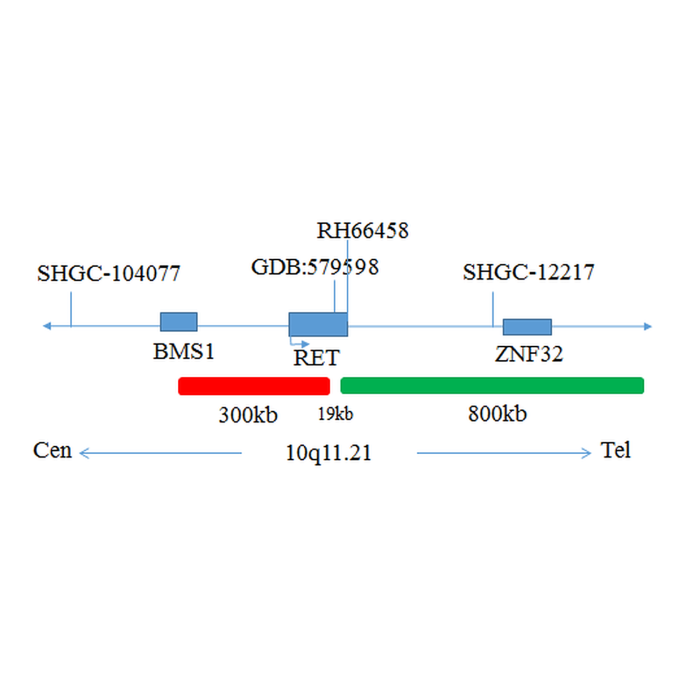
Product Introduction This kit uses Orange fluorescein and Green fluorescein to label RET. RET probe can be bound to the target detection site by in situ hybridization.
Product Main Components
The kit consists of RET dual color probe
Component name
Specifications
Quantity
Main components
RET dual color probe
100μL/Tube
1
RET orange probe ; RET green probe
Applicable Instruments
Fluorescence microscopy imaging systems, including fluorescence microscopy and filter sets suitable for DAPI (367/452), Green (495/517), and Orange (547/565).